Artificial Intelligence is changing social media faster than ever before.
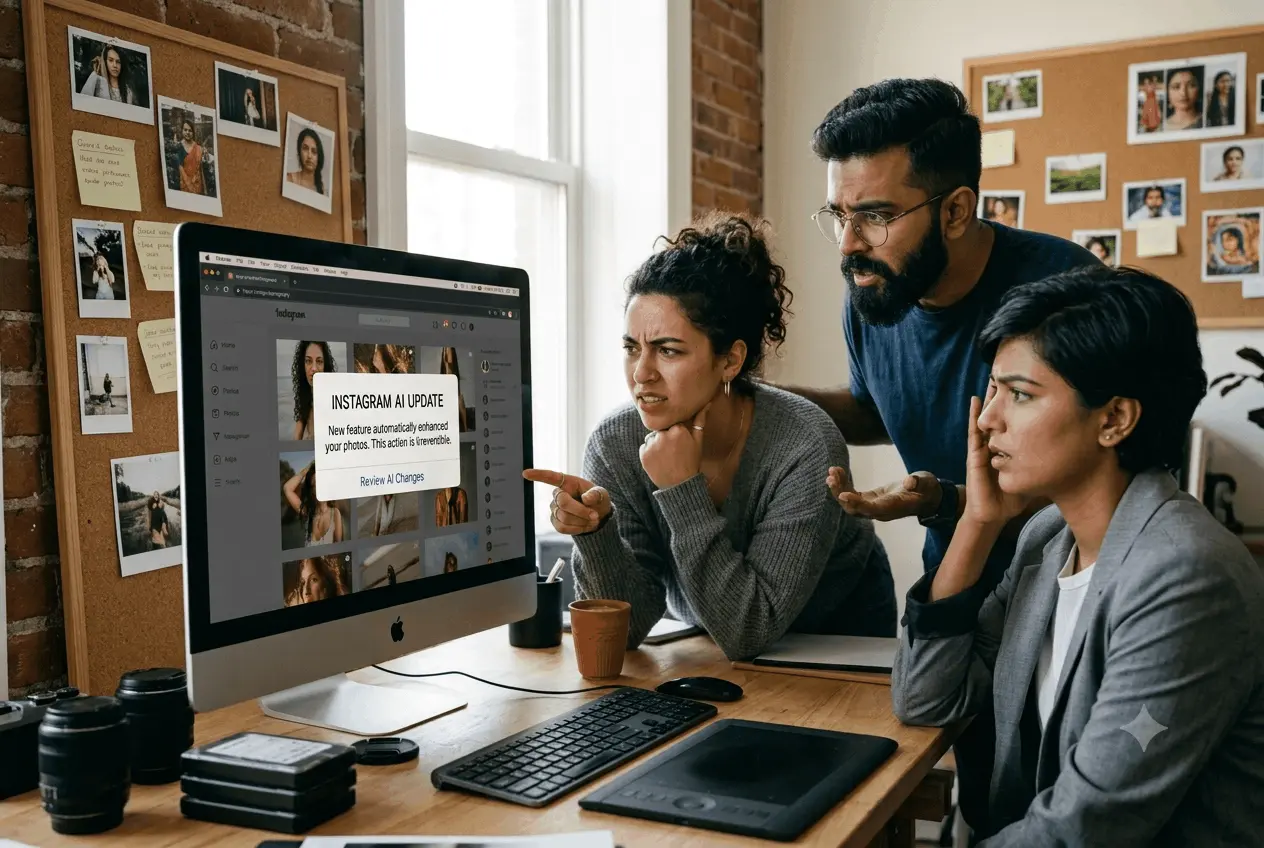
Meta has recently introduced Muse Image, a powerful AI-powered image generation and editing capability integrated into Instagram and Meta AI. The technology enables users to generate entirely new AI images by referencing public Instagram profiles, allowing AI to use publicly available photographs as visual references.
While Meta promotes this as a creative innovation, it has sparked global debate around privacy, consent, digital identity, cybersecurity, and legal compliance. According to Meta, eligible public adult Instagram accounts can be referenced for AI image generation unless the account owner disables the feature through available settings. Public reports note that users are not notified when their public content is used in this way.
As a Cyber Forensic Expert and Techno-Legal Professional, I believe this development marks another turning point in the evolution of digital evidence, cybercrime, and personal privacy.
Muse Image is Meta's latest generative AI system designed to:
Although Meta provides users with controls to opt out where available, the rollout has generated widespread concern because many users were unaware that public profile content could be used for AI image generation.
For years, users assumed that making a photograph "public" simply meant other people could view or download it.
Artificial Intelligence changes that assumption completely.
Today, AI can:
This is no longer merely photo editing.
It represents the creation of entirely new digital identities.
Privacy has traditionally relied on three principles:
When AI can generate new images from publicly shared photographs, many users question whether existing privacy expectations adequately cover these new uses.
Public reporting indicates that users are generally not notified when their public profile is referenced to generate AI images.
This creates several unanswered questions:
AI can now convincingly alter:
Such capabilities increase the risk of misinformation, impersonation, and reputational damage.
From a cyber forensic perspective, AI-generated imagery significantly expands the cyber threat landscape.
Potential misuse includes:
Cybercriminals can create convincing fake digital identities using publicly available images.
Fraudsters may generate highly realistic profile photographs to support fake online relationships.
Scammers can fabricate executive photographs, business meetings, and promotional material to make fraudulent investment schemes appear genuine.
Attackers can create convincing executive images to strengthen Business Email Compromise (BEC) attacks.
Synthetic images may be used for blackmail, harassment, or reputational attacks.
AI-generated visuals can be falsely presented as evidence of events that never occurred.
Visual credibility significantly increases the effectiveness of phishing and impersonation attacks.
Artificial Intelligence has fundamentally changed the nature of digital evidence.
Investigators must now determine:
Traditional digital forensic techniques such as metadata analysis, cryptographic hash verification, provenance examination, and chain-of-custody documentation are becoming even more critical.
India's digital regulatory framework is rapidly evolving to address emerging AI challenges.
The introduction of advanced AI image generation raises important legal questions relating to:
The Digital Personal Data Protection Act, 2023 (DPDP Act) emphasizes lawful processing, transparency, accountability, and the rights of individuals over their personal data. How AI systems that generate content from public images align with these principles will continue to be an area of regulatory and legal scrutiny.
Similarly, Indian courts are increasingly encountering cases involving:
The legal landscape surrounding AI-generated content is likely to evolve significantly in the coming years.
Organizations should not ignore these developments.
Businesses should strengthen:
Executive photographs, company branding, and publicly available corporate content can all become targets for AI-enabled impersonation.
If you maintain a public Instagram account, consider the following best practices:
Investigators should assume that any digital image could potentially be AI-generated or AI-modified.
Best practices include:
Artificial Intelligence is not the problem.
The real challenge lies in trust.
As AI becomes capable of generating increasingly realistic images, videos, voices, and identities, society must establish stronger safeguards to balance innovation with privacy, accountability, and legal certainty.
Technology companies, regulators, investigators, businesses, and individual users all share responsibility for ensuring that AI enhances creativity without compromising digital rights or public trust.
The future of digital evidence will no longer depend solely on what we can see.
It will depend on what we can verify.
As AI-generated content becomes indistinguishable from reality, cybersecurity professionals, forensic investigators, legal practitioners, policymakers, and organizations must adopt new approaches to preserve authenticity, protect digital identity, and maintain confidence in electronic evidence.
At Digital Task Force, we continue to assist organizations, law enforcement agencies, legal professionals, and businesses with Cyber Forensics, AI Risk Assessment, Digital Evidence Examination, Incident Response, Cyber Investigations, Information Security Management Systems (ISMS), Digital Identity Protection, and Techno-Legal Consulting to help them navigate the rapidly evolving AI landscape.
Dr. Rohan Nyayadhish is the Founder of Digital Task Force and a nationally recognized Techno-Legal Expert, Cyber Forensic Examiner, AI & Cryptocurrency Specialist, Court Qualified Forensic Expert, ISMS Auditor, Researcher, Author, and Court Commissioner. With more than 20 years of professional experience, he has assisted law enforcement agencies, courts, financial institutions, government organizations, and corporate enterprises in cybercrime investigations, digital evidence examination, cybersecurity governance, and techno-legal advisory services across India.
© 2026 Digital Task Force (ISO-9001 : 2015 & ISO/IEC 27001 : 2022 Certified)